

Influencer Affiliate Programs: Ultimate Guide for 2026

Learn how influencer affiliate programs work, how to track creator sales, meet the best tools, and create your first program for free.
70% of influencer marketers say affiliates are critical to the success of their influencer marketing program, especially when the goal is to generate sales.
One of the biggest challenges is how to create and track this growth channel formally.
That’s why in this guide, we’ll cover what influencer affiliate programs are, how they work, how to track sales with links and coupon codes, which commission models to use, what mistakes to avoid, and how to create a coupon-based influencer program for free with Siren.
TL;DR: Key Takeaways
- An influencer affiliate program rewards creators for performance. Brands pay influencers when they drive sales, signups, leads, subscriptions, or other trackable actions.
- Affiliate links and coupon codes solve different tracking problems. Links work well when people can click directly from blogs, newsletters, YouTube descriptions, or link-in-bio pages. Coupon codes work better for TikTok, Instagram, podcasts, livestreams, and other channels where people may buy later.
- The most common payout model is pay-per-sale, but brands can also use pay-per-lead, pay-per-click, recurring revenue share, or two-tier commissions depending on their product, margins, and sales cycle.
- With Siren, you can launch a free coupon-based influencer affiliate program using a ready-made recipe, unique coupon codes, and automatic commission tracking when those codes are used at checkout.
What is an Influencer Affiliate Program?
An influencer affiliate program is a performance-based partnership where creators promote a brand and earn a commission when they drive a specific action, such as a sale or a signup.
The company gives each influencer a trackable link, coupon code, or custom landing page to track the performance.
Influencer Affiliate Programs vs Traditional Influencer Marketing
Traditional influencer marketing is usually campaign-based: a brand pays a creator a fixed fee to publish content, and performance is often measured through reach, impressions, engagement, clicks, or content output.
An influencer affiliate program is different because compensation is tied to measurable outcomes. The creator earns when their audience takes action.
| Model | How creators are paid | Main goal | How performance is measured |
|---|---|---|---|
| Traditional influencer marketing | Flat fee, free product, or campaign payment | Awareness, reach, content creation, brand visibility | Impressions, views, engagement, clicks, content delivered |
| Influencer affiliate program | Commission per sale, signup, subscription, lead, or other tracked action | Revenue, customer acquisition, measurable growth | Sales, conversions, coupon usage, affiliate link clicks, revenue by creator |
Why Do Influencer Affiliate Programs Matter in 2026?
Influencer marketing is becoming more performance-driven. Brands still care about reach and content quality, but they also need to know which creators are actually driving sales, signups, and revenue.
Here are some statistics that show the importance of creating an influencer affiliate program as a growth channel:
- 76.9% of brands use affiliate commissions as a negotiation tactic when working with influencers. (Source: Modash)
- Influencer marketing is shifting from one-off sponsored posts to longer-term creator relationships, with brands valuing creators as strategic partners, not just content distribution channels. (Source: Vogue)
- Affiliate links are widespread in creator content, but disclosure compliance remains a major issue, which means brands need clearer program rules, better tracking, and stronger creator guidelines. (Source: Influenceflow)
Affiliate Links vs Influencer Coupon Codes
Most influencer affiliate programs use one of two tracking methods: affiliate links, coupon codes, or a combination of both.
Here are the main differences and which one you should choose:
Affiliate links
They work best when the audience can click directly from the content. They are commonly used in blog posts, newsletters, or comparison articles.
The main advantage is that they create a direct tracking path. If someone clicks the influencer’s link and buys, the program can attribute that conversion to the creator.
Influencer coupon codes
Influencer coupons are useful for videos, podcasts, webinars, or livestreams.
They also give the audience a clear reason to buy, often creating urgency or exclusivity within the community.
| Tracking method | Best for | Main advantage |
|---|---|---|
| Affiliate links | Blogs, newsletters, YouTube descriptions, resource pages, review content | Direct click-based attribution |
| Influencer coupon codes | TikTok, Instagram, podcasts, videos, livestreams, offline mentions | Easy to remember and use at checkout |
| Links + coupon codes | Multi-channel creator programs | Better attribution coverage across different buyer journeys |
Types of Influencer Affiliate Programs by Payout Structure
Here are the most common payout models you can find when building your program.
Pay-per-sale
Pay-per-sale is the standard influencer affiliate model.
Here, influencers earn a commission every time someone buys through their affiliate link, coupon code, referral code, or custom landing page.
Pay-per-click
Pay-per-click rewards influencers based on the number of clicks they generate.
Instead of paying only when someone buys, the brand pays for qualified traffic sent through the influencer’s unique link. (This one is less used in 2026, but some influencers and brands still work with it.)
Pay-per-lead
Pay-per-lead rewards influencers when their audience completes a specific action, such as a registration or a sign-up.
This model is common for SaaS, B2B products, education businesses, financial services, and companies with longer and often more complex buying cycles.
Recurring revenue share
Recurring revenue share is common for SaaS, memberships, subscription boxes, communities, and other subscription-based products.
In this model, the brand pays influencers a percentage of the customer’s subscription revenue for a defined period.
Benefits of Influencer Affiliate Programs
Here are some of the main benefits for brands that have decided to create an influencer affiliate program:
- More measurable influencer marketing: Affiliate links, coupon codes, and referral codes make it easier to understand which creators are driving real business outcomes, not just views or likes.
- Lower upfront risk: Instead of paying only for content delivery, brands can tie part of the creator’s compensation to performance. This is especially useful for smaller brands that need creator partnerships to be accountable.
- Stronger long-term partnerships: Affiliate programs can turn one-off creator campaigns into ongoing revenue relationships. This matters because influencer marketing is shifting toward deeper, longer-term creator partnerships instead of isolated sponsored posts.
- Better attribution across channels: Using both links and coupon codes helps brands track conversions across blogs, newsletters, YouTube, TikTok, Instagram, podcasts, livestreams, and other channels where the buying journey is not always click-based.
- More scalable word-of-mouth: Influencers already have trust with their audience. An affiliate program gives brands a structured way to turn that trust into trackable referrals, sales, and customer acquisition.
How to Create a Free Influencer Affiliate Program With Siren
You can create a free influencer affiliate program with Siren by tracking sales through coupon codes.
Here is how it works.
Step 1: Start with the ready-made Coupon-Based Influencer Program recipe
Siren’s Coupon-Based Influencer Program recipe gives you a ready-made program structure you can use instead of building the logic from scratch.
This program is designed to integrate with your stack. View all integrations here.
Step 2: Assign each influencer a unique coupon code
Create a coupon for each influencer and link it to that influencer’s collaborator profile in Siren.
The coupon can give the customer a real discount, such as 10% or 15% off, if you want to create an extra incentive to buy.
You can also create a zero-dollar coupon and use it purely for tracking. That gives you flexibility: the code can work as a customer offer, an attribution mechanism, or both.
Step 3: Track sales and calculate commissions automatically
When the customer uses the influencer’s coupon code at checkout, Siren ties the transaction to that influencer.
This keeps the program easy:
- The influencer shares their code.
- The customer uses the code at checkout.
- Siren attributes the sale.
- The influencer earns a commission.
Create your influencer affiliate program for free
Best Practices for Influencer Affiliate Programs
After working with influencer and affiliate programs, it’s crystal clear that the program does not work just because you gave creators a coupon and hoped for the best.
Here are a few best practices to keep in mind.
1. Work with different types of influencers
Do not only chase creators with the biggest audiences.
Micro-influencers often have tighter-knit communities and greater trust with their audiences.
This is important for niche products, SaaS tools, education, health, wellness, and eCommerce brands where audience fit matters more than follower count.
2. Make tracking simple from day one
Every creator should have a clear way to get credit for the customers they send.
That usually means giving them a unique affiliate link, coupon code, or both.
The important part is that no one should be guessing who drove what. If a creator brings sales, the program should be able to track them.
3. Give creators assets to help them sell
Give them material they can use:
- Product images
- Short product descriptions
- Key benefits
- Customer pain points
- Example posts
- Swipe copy
- FAQs
- Demo videos
- Approved claims
- Discount details
4. Make the commission worth caring about
A basic flat commission can work, but strong programs usually test more creative incentives.
Depending on your margins, you can experiment with:
- Performance tiers
- Limited-time commission bumps
- Launch bonuses
- Recurring commissions
- Bonuses for first sales
- Higher rewards for top creators
The goal is to make the creator feel like the upside is worth the effort.
5. Reuse influencer content with permission
If an influencer creates a strong product demo, review, tutorial, or testimonial, ask for permission to reuse it across your own channels.
You can repurpose creator content in your social media, email campaigns, landing pages, and so on.
This helps the brand get more value from each partnership, and it shows creators that you are invested in making the relationship work both ways.
The best influencer affiliate programs are not just payout systems. They are content, distribution, and trust-building systems.
Influencer Affiliate Program Examples
Influencer affiliate programs are not only for giant companies or global marketplaces with a huge budget.
Here are three real examples that show how different influencer affiliate models can work.
1. Magic Spoon: creator affiliates with custom codes and links

Magic Spoon is a high-protein cereal brand that uses an affiliate program to work with creators in health, fitness, keto, wellness, and lifestyle niches.
How it works:
- Affiliates receive a custom discount code and affiliate link.
- Creators can promote the brand through their websites and social media profiles.
- Magic Spoon offers a commission on referred sales.
- The program is managed through Impact, giving affiliates access to reporting and payments.
Why it works:
Magic Spoon is a natural fit for creator-driven promotion because the product is visual, easy to explain, and tied to specific lifestyle angles like high-protein eating, low-sugar snacks, gluten-free diets, fitness, and nostalgia.
For DTC brands, a custom code plus an affiliate link gives creators two ways to drive sales. The link works when someone clicks directly. The code works when someone remembers the offer later and uses it at checkout.
2. Blume: influencer partnerships for a niche wellness audience
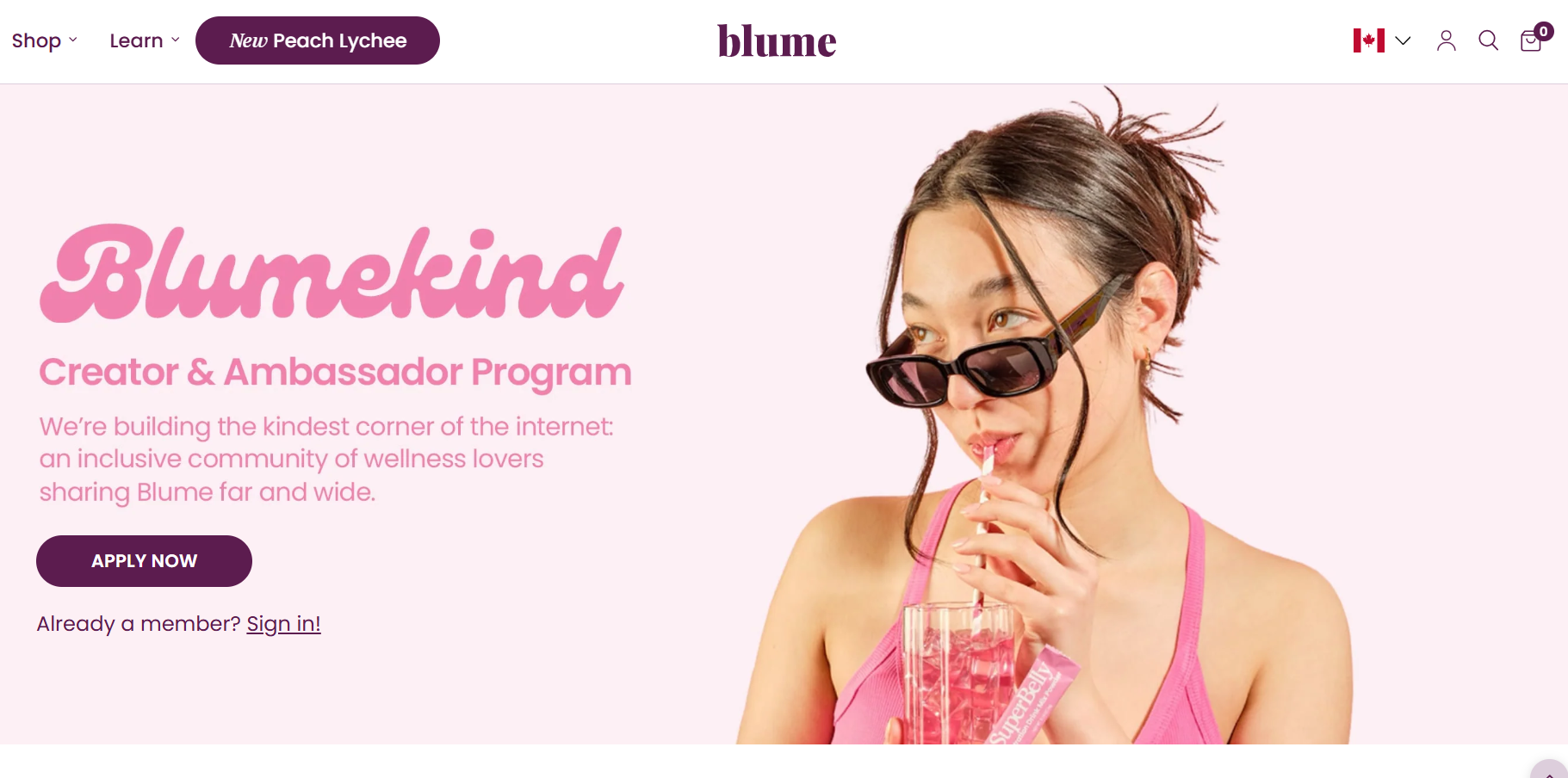
Blume is a skincare and wellness brand that has grown through community, creator content, and social-first product education.
How it works:
- Creators can promote products that fit specific audience needs, such as skincare routines, self-care, wellness, and personal care.
- The creator’s value is not just reach; it is trust with a specific audience.
- Affiliate-style programs can help the brand connect content with measurable sales through links, codes, or tracked landing pages.
Why it works:
Wellness and skincare products usually need context. Customers want to know what the product does, how it fits into a routine, who it is for, and whether someone they trust actually uses it.
That makes creators especially valuable. A creator can show the product in use, explain the routine, compare it with alternatives, and answer objections in a way a product page cannot always do alone.
Influencer affiliate programs work well when the product benefits from education and trust. The more personal the purchase decision, the more important creator fit becomes.
3. Blenders Eyewear: creator promotion for a visual DTC product
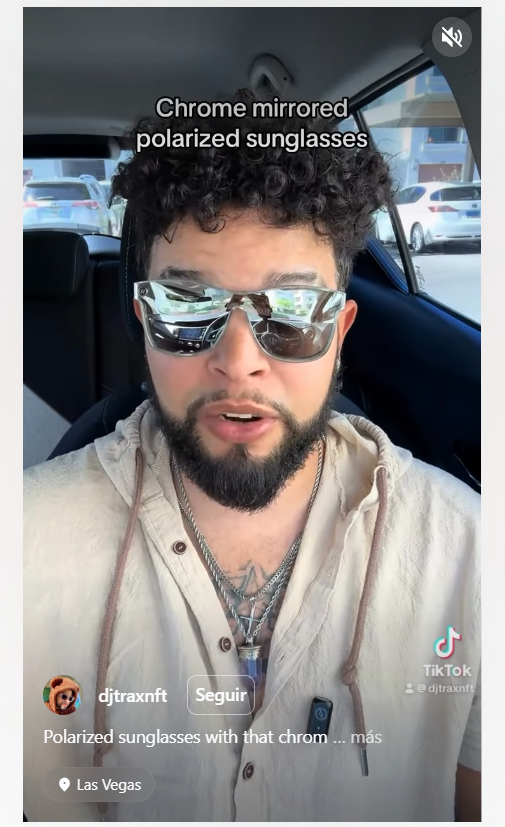
Blenders Eyewear is a sunglasses and eyewear brand that fits naturally into creator-led promotion because the product is visual, lifestyle-driven, and easy to show in content.
How it works:
- Creators can promote products through social content, reviews, lifestyle posts, and product recommendations.
- The brand can use affiliate links, coupon codes, or both to connect creator promotion with sales.
- Because sunglasses are easy to demonstrate visually, creators can show the product in everyday contexts instead of explaining it through long technical content.
Why it works:
Blenders are the kind of product that benefits from creator trust and visual proof.
A creator can show how the sunglasses look, when they use them, which style they prefer, and how they fit into a specific lifestyle: beach, travel, fitness, festivals, outdoor sports, or daily wear.
That makes the promotion feel more natural than a generic ad.
Visual DTC products are a strong fit for influencer affiliate programs because creators can demonstrate the product quickly and make the recommendation feel personal.
5 Best Influencer Affiliate Program Tools
There are many tools you can use to run an influencer affiliate program. Some are built for creator discovery and campaign management, while others focus more on tracking, attribution, commissions, and payouts.
Here are five options worth knowing:
| Tool | Best for | Main advantage |
|---|---|---|
| Siren | Brands that want full partner management software able to create multiple programs. | Free plan available, unlimited programs, and ready-made templates like the Coupon-Based Influencer Program recipe |
| Modash | Shopify brands that need influencer discovery, outreach, gifting, affiliate tracking, and creator payments | End-to-end creator workflow, including discovery, content tracking, promo codes, links, and payments |
| Upfluence | eCommerce brands and agencies running scalable influencer and affiliate campaigns | Influencer discovery, campaign automation, affiliate tracking, and integrations with platforms like Shopify, WooCommerce, Magento, BigCommerce, Amazon, and Stripe |
| impact.com | Mid-size and larger brands managing affiliates, influencers, and referral partners in one place | Strong partnership tracking, attribution, reporting, and fraud protection |
| Refersion | eCommerce brands on Shopify or WooCommerce that want affiliate and influencer tracking | Tracks sales through referral links and promo codes, with flexible commission management |
What Metrics Should You Track?
To know if your influencer affiliate program is actually working, look beyond views, likes, and comments.
Those numbers can show content performance, but they do not tell you whether creators are driving real business results.
Track these five metrics first:
- Revenue by influencer: Shows which creators are actually generating sales, not just attention.
- Coupon code usage: Helps you measure sales from video, podcast, social, and other channels where people may not click an affiliate link directly.
- Conversion rate: Shows how many referred visitors, clicks, or coupon users become customers.
- Payout-to-revenue ratio: Helps you understand whether the program is profitable by comparing commissions paid against revenue generated.
- Refund or cancellation rate: Shows whether a creator is driving high-quality customers or just low-intent, discount-driven purchases.
The goal is not to track everything. It is to understand which creators are worth investing in, which offers are working, and whether the program is creating profitable growth.
Final Takeaways
Influencer affiliate programs are becoming one of the most practical ways to make creator partnerships measurable.
Instead of treating influencer marketing as a campaign expense, you can turn it into a performance-based channel where creators are rewarded for the actions that matter: sales, signups, leads, subscriptions, or repeat purchases.
The key is to keep the program simple and well-structured with the right tool.
Choose the right creators. Give them clear tracking assets. Use affiliate links when clicks matter, coupon codes when memorability matters, and both when you need better attribution across channels. Set a commission model that makes sense for your margins. Then track the metrics that show whether the program is actually creating profitable growth.
If you want to create your first influencer affiliate program for free, get Siren Lite here.