

Customer Rewards Programs: Complete Guide for 2026

Learn how customer rewards programs work, which reward models to use, what actions to incentivize, and how to create your first customer rewards program with Siren.
48% of customers show loyalty by recommending brands to friends, family, and colleagues. That means customer loyalty shows up in the actions they take after they buy: referrals, reviews, advocacy, engagement, and other behaviors that help a business grow.
A customer rewards program gives this channel a clear structure that allows you to define which actions matter, track when they happen, and reward customers.
In this guide, we’ll cover what customer rewards programs are, how they work, the main types of rewards, examples, best practices, metrics to track, and how to create your first customer rewards program with Siren.
TL;DR
- A customer rewards program is a structured way to reward customers when they take valuable actions, such as repeat purchases, referrals, or renewals.
- Common customer rewards program types are points-based rewards, tiered rewards, cashback or store credit, referral-based rewards, and subscription or membership rewards.
- With Siren, you can start with a Customer Rewards Program recipe, define what customer action triggers a reward, decide who gets credit, set the reward logic, and review rewards before approval.
- To measure performance, track business outcomes like repeat purchase rate, retention rate, customer lifetime value, or referral revenue.
What Is a Customer Rewards Program?
A customer rewards program is a structured way to reward customers when they take actions that are valuable to your business.
Those actions normally are repeat purchases, referrals, product reviews, or other behaviors that help the business grow.
Basically, the goal is to make valuable customer actions easier to repeat, to measure, and to reward.
Why Customer Rewards Programs Matter in 2026: Key Benefits
A customer rewards program is a growth channel. When you reward the right customer actions, it can encourage repeat purchases, referrals, upgrades, reviews, advocacy, and long-term engagement in a way that directly supports revenue and retention.
Here are some numbers that show the importance of this channel:
- Profit matters more than participation. 66% of enterprise brands plan to improve loyalty program profitability, which means rewards need to drive valuable behaviors, not just more sign-ups. Source: Retail Dive.
- Retention can change the economics. A 5% increase in customer retention can boost profits by up to 95%, making rewards programs a direct lever for repeat purchases and lifetime value. Source: Stamp Me.
- Generic points are losing impact. By 2026, brands are moving away from one-size-fits-all points systems toward more personalized, behavior-driven rewards. Source: BLOY.
- Rewards are becoming relationship tools. Loyalty programs are shifting toward experiences, gamification, engagement, and advocacy rewards that build stronger customer connections. Source: Retail Dive.
Customer Rewards Program vs. Loyalty Program vs. Referral Program
A loyalty program usually focuses on keeping existing customers engaged and encouraging repeat purchases. A referral program rewards people for bringing in new customers. A customer rewards program is broader than both because it can reward any customer behavior that creates value for the business.
| Program Type | Main Goal | Who It Rewards | Common Rewarded Actions | Best For |
|---|---|---|---|---|
| Customer rewards program | Encourage valuable customer behaviors | Existing customers | Purchases, referrals, reviews, renewals, upgrades, milestones, advocacy, engagement | Businesses that want a flexible way to reward multiple customer actions |
| Loyalty program | Increase retention and repeat purchases | Existing or repeat customers | Repeat purchases, points earned, tier progress, app usage, membership activity | Ecommerce, retail, subscriptions, memberships, and brands focused on retention |
| Referral program | Acquire new customers through word of mouth | Customers, partners, affiliates, or advocates | Referring a friend, sharing a link, bringing in a qualified lead, driving a sale | Businesses that want to turn happy customers into a customer acquisition channel |
Types of Customer Rewards Programs
Here are the 5 most common types.
Points-Based Rewards Program
Tiered Rewards Program
Cashback or Store Credit Program
Referral-Based Customer Rewards Program
Subscription or Membership Rewards Program
Points-Based Rewards Program
A points-based rewards program lets customers earn points when they complete specific actions, such as making a purchase, creating an account, referring a friend, leaving a review, or engaging with the brand.
Customers can usually redeem those points for discounts, store credit, free products, perks, or exclusive access.
This model works well when you want to make repeat engagement feel visible and easy to understand.
Tiered Rewards Program
A tiered rewards program gives customers better benefits as they reach higher levels of activity, spending, or engagement.
For example, a customer might start in a basic tier, then unlock higher rewards after reaching a certain number of purchases, annual spend, referrals, or subscription milestones.
This model works well when you want to encourage customers to keep progressing over time.
Cashback or Store Credit Program
A cashback or store credit program rewards customers with money back, account credit, or store credit after they complete a purchase or another valuable action.
This can be especially useful for ecommerce stores, subscriptions, memberships, or service businesses where credits can encourage the next purchase.
This model works well when you want rewards to directly support retention and repeat revenue.
Referral-Based Customer Rewards Program
A referral-based customer rewards program rewards customers when they refer new buyers, users, leads, or subscribers.
The reward might be a discount, cash bonus, account credit, free product, or another incentive. Some programs reward only the referring customer, while others reward both the referrer and the new customer.
This model works well when you want to turn loyal customers into an acquisition channel.
Subscription or Membership Rewards Program
A subscription or membership rewards program gives customers benefits for staying subscribed, renewing, upgrading, or reaching membership milestones.
Rewards might include account credits, exclusive content, early access, premium support, member-only discounts, or special perks.
This model works well for SaaS companies, memberships, communities, course creators, and subscription-based businesses.
What Actions Should You Reward?
A reward should be tied to an action that helps the business grow, retain customers, collect useful feedback, or create advocacy.
Here are common customer actions you can reward:
- Repeat purchases: Reward customers when they buy again, place a second order, or reach a purchase milestone.
- Referrals: Reward customers when they refer a friend, lead, subscriber, or new buyer.
- Reviews and testimonials: Reward customers for leaving a product review, sharing feedback, or participating in a case study.
- User-generated content: Reward customers for sharing photos, videos, posts, tutorials, or other content featuring your product.
- Subscription renewals: Reward customers when they renew a subscription, membership, service plan, or recurring purchase.
- Account upgrades: Reward customers when they move to a higher plan, buy an add-on, or expand their account.
- Community engagement: Reward customers for participating in a community, attending an event, joining a webinar, or completing a challenge.
- Product milestones: Reward customers when they complete a course, reach a usage milestone, activate a feature, or hit an important success moment.
- Feedback and surveys: Reward customers for answering surveys, sharing product feedback, or helping you improve the customer experience.
- Advocacy actions: Reward customers for sharing your brand, joining an ambassador program, posting about their experience, or introducing your business to others.
What Rewards Should You Offer?
A good customer reward should be easy to understand and relevant to your customer and business:
- Discounts: Simple percentage or fixed-amount discounts for future purchases.
- Store credit or account credit: Credit customers can use toward their next order, subscription, upgrade, or service.
- Cashback: A direct monetary reward based on a purchase, referral, or other qualifying action.
- Points: A flexible currency customers can earn and redeem for discounts, products, perks, or status.
- Free products or samples: Useful for ecommerce, beauty, food, apparel, supplements, or product-led brands.
- Exclusive access: Early access to new products, private launches, limited drops, beta features, or members-only content.
- VIP perks: Priority support, faster shipping, special service, premium onboarding, or account benefits.
- Tier upgrades: Higher loyalty status, better earning rates, or exclusive benefits as customers reach milestones.
- Gift cards: A flexible reward that can work well for referrals, surveys, reviews, or advocacy actions.
- Partner rewards: Benefits from another brand, partner, marketplace, community, or ecosystem.
- Experience-based rewards: Events, community access, consultations, workshops, or personalized experiences.
- Charitable rewards: Donations or impact-based rewards connected to causes your customers care about.
How to Create a Customer Rewards Program With Siren
Step 1: Choose the Right Siren Setup
Start by choosing the Siren edition that matches where your customer rewards program needs to run.
If your website lives in WordPress, the WordPress edition gives you the most affordable self-hosted way to launch a customer rewards program. This is usually the best starting point for businesses that want to create and manage rewards close to their existing WordPress site, checkout, forms, or customer experience.
If your customer rewards program needs to run across a broader stack, multiple channels, or a hosted environment, Siren Cloud Self-Serve gives you a more flexible implementation path. It is built for teams that need a hosted incentive engine for customer rewards, referrals, affiliates, partners, revenue-share, royalty, commission, or performance-bonus programs without stitching together several single-purpose tools.
Step 2: Start with the Customer Rewards Program Recipe
Siren gives you a Customer Rewards Program recipe as your starting point. The recipe is a ready-made structure for rewarding valuable customer actions, including repeat purchases, referrals, reviews, renewals, upgrades, milestones, engagement, or other behaviors that help your business grow.
This is useful because a customer rewards program doesn’t have to be limited to generic points or discounts. With Siren, you can define what action should trigger a reward, who should receive credit, how the reward should be calculated, and when it should be approved.
Step 3: Launch, Track, and Review Rewards
Invite your first customers into the program, define the actions you want to reward, and start tracking customer activity through Siren.
As customers complete qualifying actions, you can review whether each reward meets your program rules before approving it. This gives you a controlled way to test the program, understand which customer behaviors create value, and manage rewards without relying on spreadsheets or manual tracking.
Over time, you can expand beyond one customer rewards program into other program types, such as referral programs, affiliate programs, partner incentives, performance bonuses, royalties, commissions, or revenue-share models.
3 Customer Rewards Program Examples
Here are 3 examples of customer reward programs to inspire you:
1. Starbucks Rewards
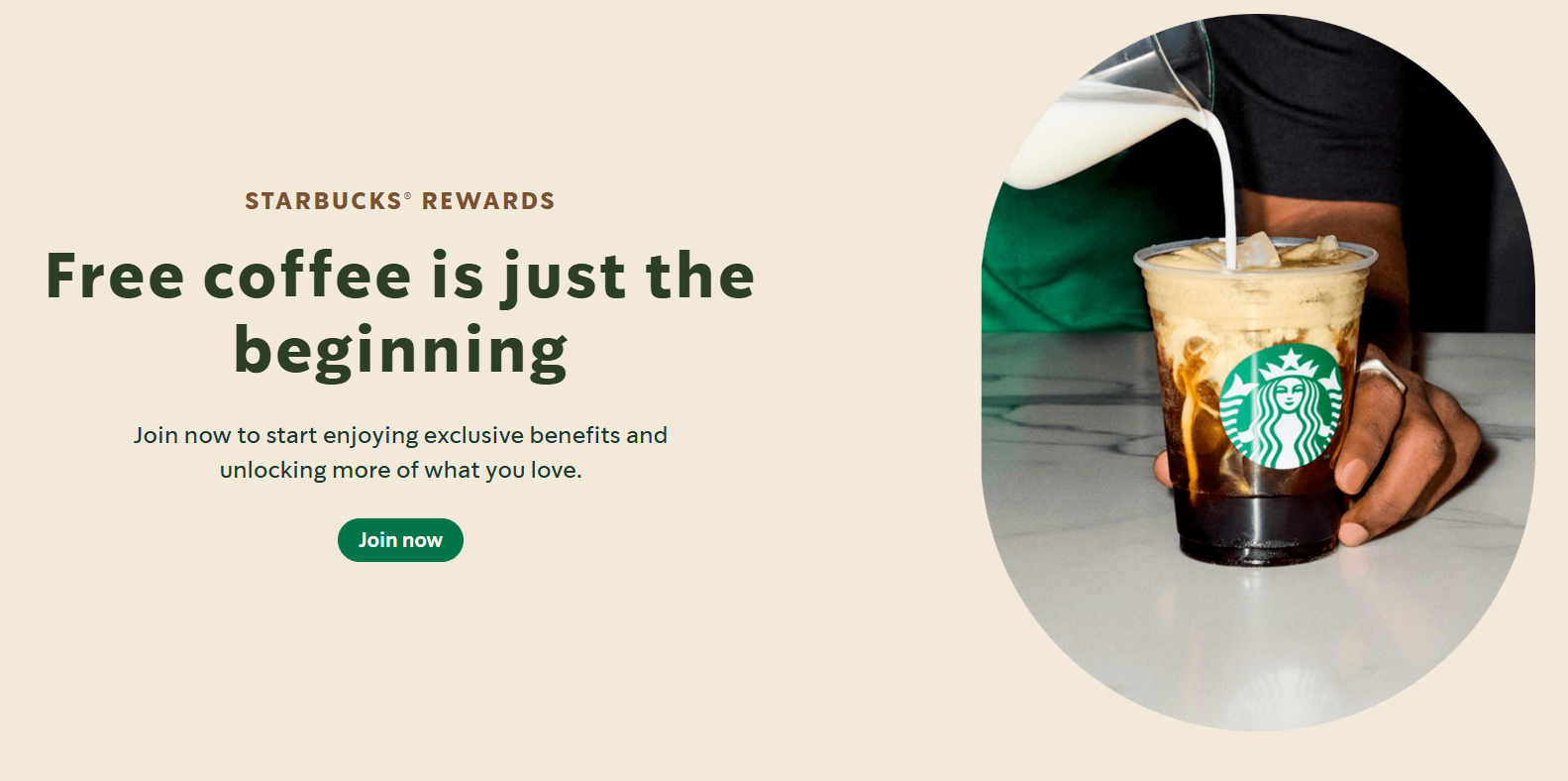
Starbucks Rewards is one of the most recognizable examples of a purchase-based customer rewards program. Members earn “Stars” through purchases and app-based activity, then redeem those Stars for rewards such as drinks, food, customizations, or other perks.
The program also shows how rewards can go beyond simple discounts. Starbucks has used its loyalty program to encourage app usage, repeat purchases, reusable cup behavior, and higher engagement with the brand.
Why it works
Starbucks connects rewards directly to frequent customer behavior. The more customers buy and engage through the app, the more opportunities Starbucks has to drive repeat purchases and personalize the customer experience.
2. Sephora Beauty Insider
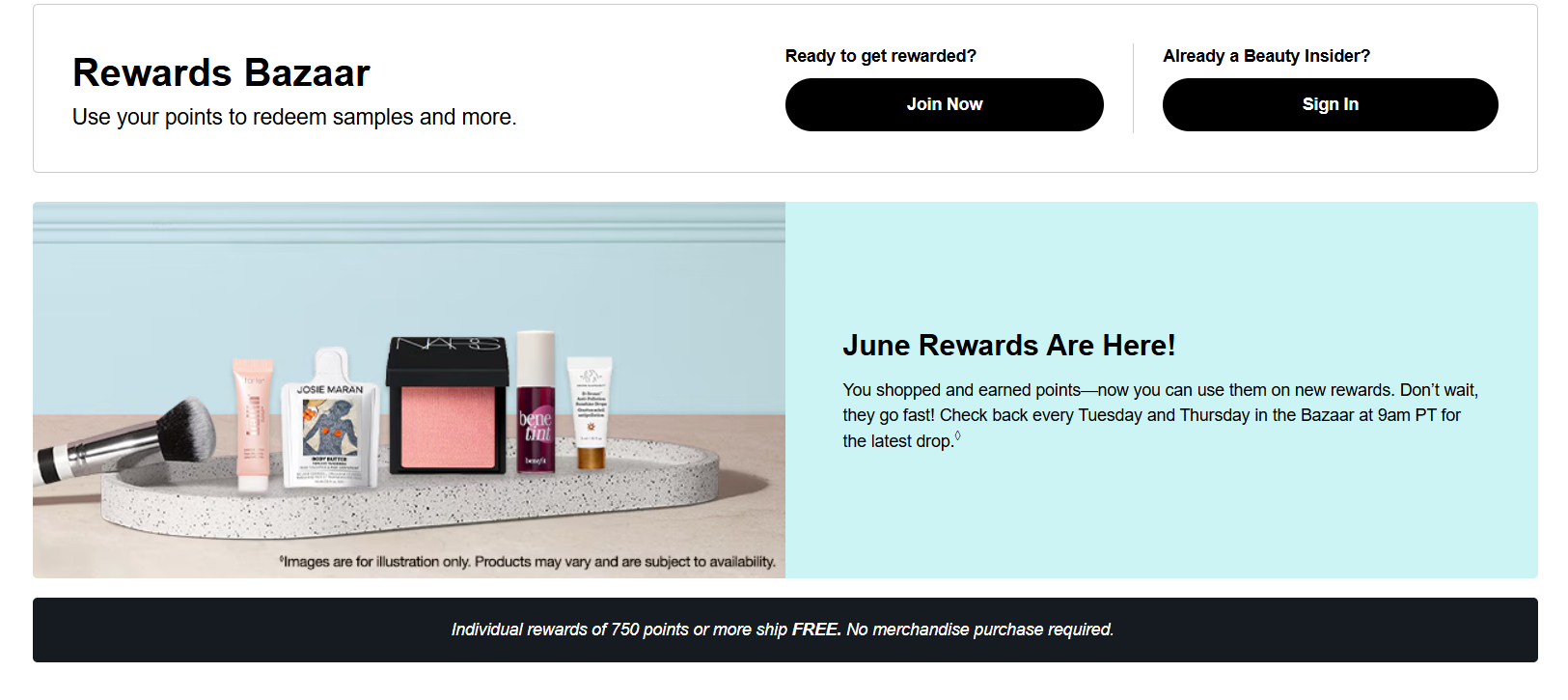
Sephora Beauty Insider is a tiered customer rewards program for beauty shoppers. Members can earn points, redeem rewards, access birthday gifts, join exclusive events, and unlock better perks as they move through higher tiers.
The program works because it combines transactional rewards with emotional and experiential benefits. Customers are not only earning points; they are also getting access to status, events, exclusive products, and personalized beauty experiences.
Why it works
Sephora gives customers a reason to keep engaging beyond the next purchase. The tiered structure encourages customers to spend and participate more over time, while the perks make the program feel more like a community than a coupon system.
3. REI Co-op Membership
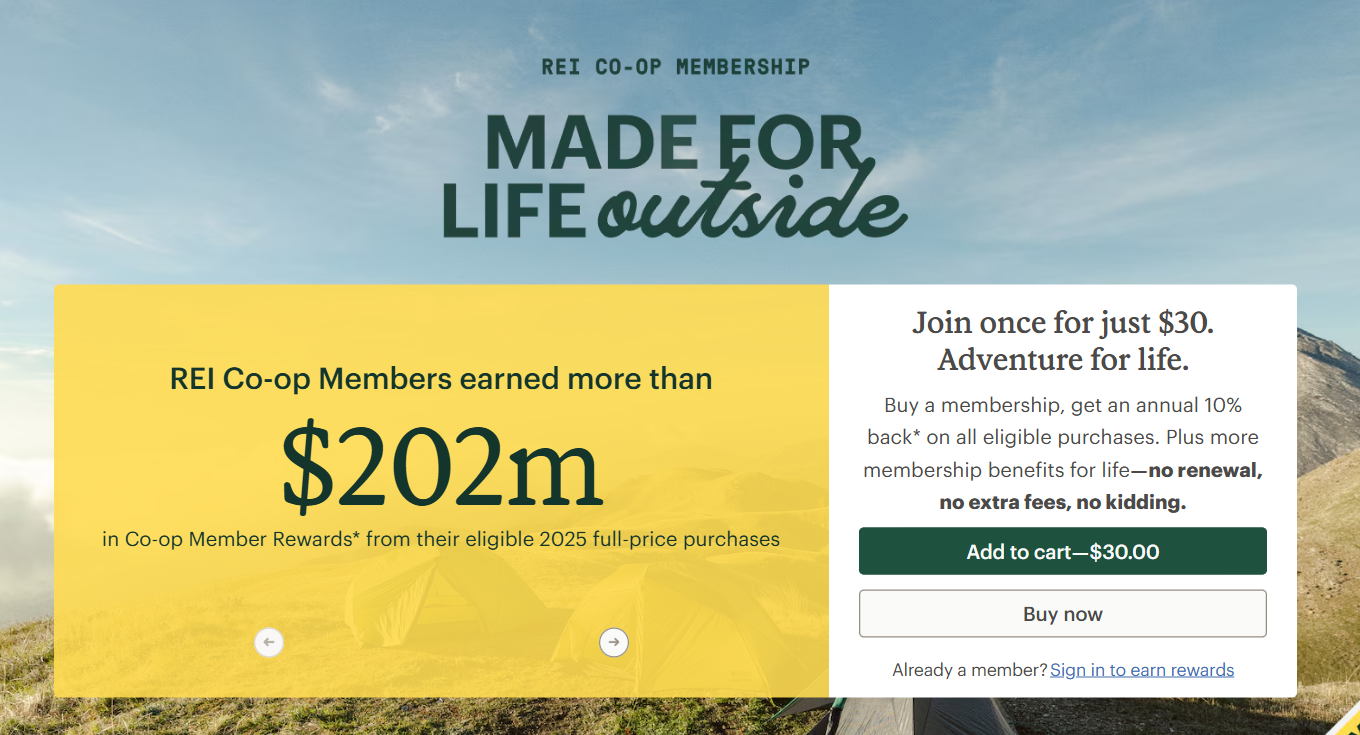
REI Co-op Membership is a customer rewards program built around a one-time membership model. Members get access to benefits such as an annual reward on eligible purchases, member-only offers, free shipping on eligible orders, access to Re/Supply used gear, discounts on shop services and rentals, and other co-op perks.
This works well because the reward is tied directly to the customer’s ongoing relationship with the brand. Instead of only giving one-off discounts, REI gives members reasons to keep buying, participating, and engaging with the co-op over time.
Why it works
REI connects rewards with membership, repeat purchasing, sustainability, and brand identity. Customers get tangible benefits, while REI builds a long-term relationship with people who are already aligned with the outdoor lifestyle.
Customer Rewards Program Best Practices
A customer rewards program works best when it is simple for customers to understand and specific enough for the business to measure. The goal is not to reward everything. The goal is to reward customer behaviors that actually support retention, revenue, advocacy, or long-term growth.
1. Start with one behavior you want to encourage
Before choosing rewards, decide what customer action matters most.
That might be a repeat purchase, referral, subscription renewal, review, upgrade, course completion, or product milestone. Starting with one clear behavior makes the program easier to launch, easier to explain, and easier to measure.
2. Match the reward to the value of the action
Not every customer action deserves the same reward.
A product review might earn points or store credit. A qualified referral might deserve a larger account credit or cash reward. A renewal or upgrade might unlock a perk, tier, or bonus.
The reward should feel valuable to the customer without making the program unsustainable for the business.
3. Make the rules easy to understand
Customers should know exactly what action earns a reward, what they receive, when they receive it, and whether any conditions apply.
If the program feels confusing, customers are less likely to participate. Clear rules also reduce support questions, payout disputes, and frustration later.
4. Track profitability, not just participation
A rewards program can look successful if many customers join, but participation alone does not prove value.
Track whether the program is increasing repeat purchases, referrals, retention, average order value, upgrades, or lifetime value. The best rewards programs create measurable business outcomes, not just member activity.
5. Avoid rewarding low-value behavior
It is easy to over-reward actions that look good but do not create meaningful growth.
For example, rewarding every small interaction may increase activity but not revenue, retention, or advocacy. Focus your rewards on behaviors that move the business forward.
6. Give customers visibility into their rewards
Customers should be able to understand their progress, available rewards, pending rewards, and payout or redemption status.
That visibility makes the program feel more trustworthy and keeps customers motivated to continue participating.
7. Leave room for the program to evolve
Many customer rewards programs start with one simple incentive, then grow into referrals, tiers, reviews, milestones, subscriptions, partner perks, or performance-based rewards.
Choose a structure that can support the first program without limiting what you may want to reward later.
Best Customer Rewards Program Tools
The best customer rewards program tool depends on what kind of rewards program you want to build. Some platforms are built for ecommerce loyalty points, others focus on referrals, and others give you more flexibility to reward different customer actions across multiple programs.
Here are a few tools to consider.
Siren Affiliates
Siren is best for businesses that want a flexible incentive engine for customer rewards, referrals, affiliate programs, partner incentives, revenue share, royalties, commissions, and performance bonuses.
Instead of limiting the program to points or discounts, Siren lets you define what customer action should trigger a reward, who gets credit, how the reward is calculated, and when it should be approved.
This makes it a strong fit if you want to start with a customer rewards program and later expand into referrals, advocacy rewards, partner incentives, or other customer-led growth programs.
Smile.io
Smile.io is best for Shopify brands that want a dedicated ecommerce loyalty platform. It supports loyalty hubs, embedded loyalty blocks, checkout extensions, points, VIP/member benefits, referrals, reporting, and Shopify POS loyalty experiences.
This makes it a good fit for ecommerce teams that want a productized loyalty program inside the Shopify ecosystem. Source: Smile.io.
LoyaltyLion
LoyaltyLion is best for ecommerce brands that want a loyalty platform focused on repeat purchases, customer retention, and loyalty-driven growth.
It is a strong fit for brands that want a dedicated customer loyalty platform rather than a broader incentive engine for multiple program types.
Yotpo Loyalty
Yotpo Loyalty is best for ecommerce brands that already use or want to use Yotpo’s broader retention marketing ecosystem.
It can be a good fit for teams that want loyalty, referrals, reviews, SMS, email, and customer retention tools connected inside one ecommerce-focused platform.
ReferralCandy
ReferralCandy is best for ecommerce brands that mainly want to reward customers for referring new buyers.
It is a good fit when the primary goal is customer acquisition through word of mouth, rather than a broader customer rewards program that also includes purchases, reviews, milestones, upgrades, or other customer behaviors.
Customer Rewards Program Metrics to Track
A customer rewards program should be measured by business impact, not just participation. It is useful to know how many customers joined, but the real question is whether the program is increasing retention, repeat purchases, referrals, customer value, and profitable growth.
Here are the key metrics to track:
- Repeat purchase rate: Shows how many customers return to buy again after their first purchase. This helps you understand whether the program is encouraging customers to come back.
- Customer retention rate: Measures how many customers continue buying, subscribing, or staying active over time. If the program is working, participating customers should retain better than non-participants.
- Customer lifetime value: Tracks how much revenue a customer generates over the full relationship with your business. A strong rewards program should increase LTV through repeat purchases, renewals, upgrades, and referrals.
- Reward redemption rate: Shows how many earned rewards are actually used. A low redemption rate may mean the reward is not valuable enough, the program is confusing, or customers do not understand how to redeem it.
- Referral revenue: Measures how much revenue comes from customers who refer new buyers, users, subscribers, or leads. This is especially important if your rewards program includes referral incentives.
- Average order value: Shows whether customers spend more after joining the rewards program. This can help you understand whether rewards, tiers, credits, or milestones are encouraging higher-value purchases.
- Reward cost vs. revenue generated: Compares how much the program costs against the revenue it creates. Track discounts, credits, payouts, and operational costs against repeat revenue, referral revenue, and customer lifetime value.
- Program participation rate: Shows how many eligible customers join and engage with the program. This is useful, but it should not be the only metric because participation does not always mean profitability.
- Churn rate: For subscriptions, memberships, SaaS, or recurring services, churn rate shows how many customers cancel or stop renewing. If rewards are tied to renewals or ongoing engagement, the program should help reduce churn over time.
Final Takeaways
A customer rewards program is not just a way to give customers points or discounts. It is a way to decide which customer behaviors matter, track those actions, and reward them consistently.
The best programs are built around clear business goals. If you want more repeat purchases, reward customers for buying again. If you want more word of mouth, reward referrals and advocacy. If you want stronger retention, reward renewals, upgrades, milestones, or long-term engagement.
The key is to make the program simple for customers and measurable for the business. Customers should understand what they earn and why. Your team should understand whether the program is improving retention, revenue, referrals, lifetime value, or profitability.
And once the first rewards program starts working, it usually does not stay as one simple program. You may want to add referrals, tiers, reviews, partner incentives, revenue share, performance bonuses, or other reward structures over time.
That is why it helps to choose a system that can grow with your incentive strategy. With Siren, you can start with a customer rewards program and expand into referral, affiliate, partner, revenue-share, royalty, commission, or performance-bonus programs without rebuilding your stack every time the next opportunity appears.