

7 Signs You Need PRM Software to Manage Partner Growth

Discover seven signs your partner program has outgrown manual tracking, spreadsheets, and simple affiliate links-and when PRM software becomes necessary.
Partner-driven growth is no longer a side channel. According to the Ecosystem Compass Report, 65% of partnership leaders report more than 20% YoY growth in partnership revenue.
But generating real results often requires more than a tracking link. As programs add partners, data sources, reward types, and approval steps, it becomes harder to determine who deserves credit, what should be rewarded, and what needs to happen before payout.
This guide covers seven signs you need PRM software. It will help you decide whether affiliate tracking is still enough, when a PRM becomes necessary, and which capabilities and platforms to consider.
Do you need PRM software? Short answer
Not every program needs PRM software from day one. Links and spreadsheets may be enough when you have few partners or reward one action, and use simple commission rules.
You definitely need PRM software when attribution becomes disputed, you reward more than just sales, or approvals and payouts depend on repeated manual checks. The need is even clearer when you reward outcomes beyond a completed sale.
What is PRM software?
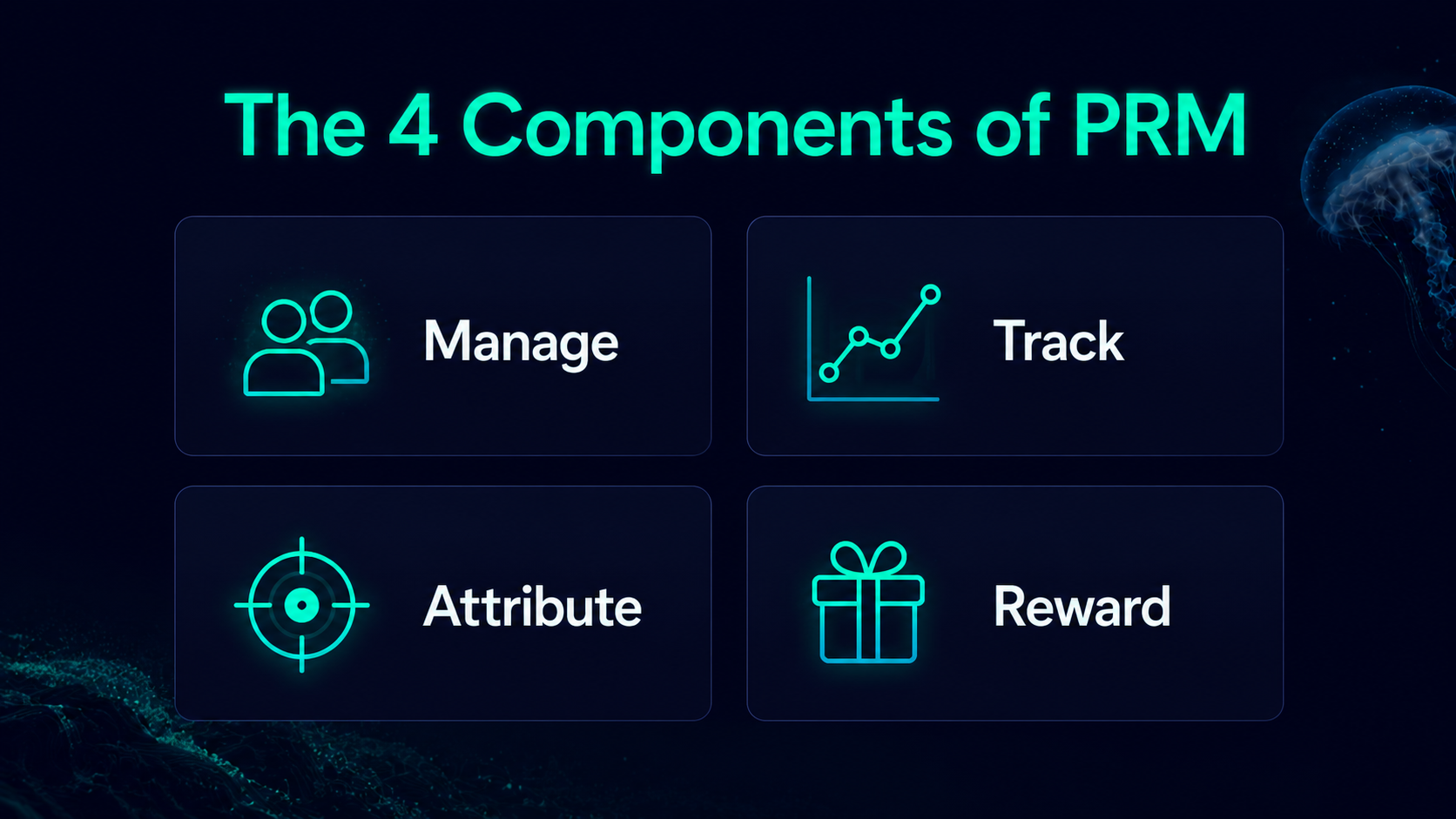
Partner relationship management (PRM) software helps companies manage the people, processes, data, and incentives behind partner-driven growth.
It connects partner management, tracking, attribution, rewards, approvals, reporting, and payouts. In practical terms, it gives the company and its partners one source of truth for what happened, who earned credit, and what should be rewarded.
7 signs you need PRM software
1. You still track referrals manually
A manual referral process often begins with form submissions, forwarded emails, tracking links, and someone updating a spreadsheet. It can work when the program is small and one person knows where everything lives.
As volume grows, referrals arrive through more channels and pass through more hands. Records get duplicated, follow-ups become inconsistent, and valid opportunities can disappear between systems.
PRM software gives each referral a trackable record and connects it to the relevant partner, activity, and status. That reduces the amount of growth data that depends on someone remembering to update a cell.
2. You struggle with disputed and unclear attribution
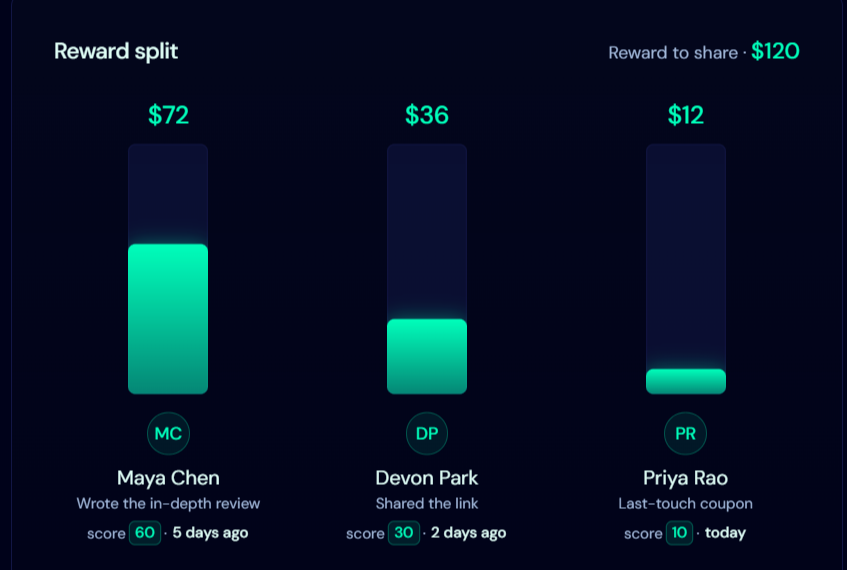
If partners regularly ask who received credit for a lead or sale, the problem is rarely just reporting. It usually means the program lacks attribution rules that everyone can understand.
A buyer may interact with several partners, links, forms, and salespeople before converting. Simply saving the last link does not explain which contribution should count, especially when the decisive activity happens later or offline.
PRM software lets you define how credit is assigned before disputes occur. Partners and internal teams can then work from the same rules instead of reconstructing the customer journey after the fact.
3. You calculate rewards in spreadsheets
Spreadsheets are useful for simple commissions. They become fragile when rewards depend on different percentages, partner tiers, products, conditions, or lifecycle events.
Each export, formula, and manual review adds another place for an error to enter the process. A small calculation mistake can quickly become a trust problem when a partner is underpaid or cannot understand how a reward was calculated.
PRM software applies reward rules consistently to the underlying activity. Your team can review exceptions without recalculating the entire program every payout cycle.
4. Your partners cannot see their own performance
Partners should not need to email your team to learn whether a referral converted or a reward was approved. Without individual reporting, every status question becomes another manual task for the program manager.
A partner portal or dedicated reporting view can show referrals, conversions, rewards, and payouts for each partner. This gives partners useful feedback while protecting information that belongs to the rest of the program.
Better visibility also helps partners improve. They can see which activities generate results instead of promoting the program without knowing what happens next.
5. Approvals and payouts depend on manual checks
Not every attributed event should trigger an immediate payment. A conversion may need to pass a return period, meet qualification criteria, or be reviewed for duplicates or fraud.
Without a defined workflow, teams struggle to distinguish pending, approved, rejected, and paid events. Attribution, reward calculation, and payout become disconnected checkpoints managed through messages and spreadsheet columns.
PRM software creates a clear path from activity to credit, approval, reward, and payment. Manual judgment can remain where it adds value without making the entire process manual.
6. You need to reward more than completed sales
Partner-driven growth does not always begin-or end-with an online purchase. A partner may create value by generating a qualified lead, booking a demo, influencing a renewal, supporting a repeat purchase, or helping an opportunity reach a specific lifecycle stage.
Other programs may need to share recurring revenue, pay sales commissions, or divide a reward among multiple contributors. These outcomes require different events, eligibility conditions, and reward rules.
A PRM should let you define the activity that matters and connect it to the right credit and incentive. That makes it possible to design the program around how partners actually contribute, rather than forcing every contribution into a completed-sale model.
7. A tracking link no longer captures the full program logic
A tracking link is excellent at connecting a click with an online action. For a straightforward affiliate program, that may be all the infrastructure you need.
The link stops being enough when value is recorded elsewhere: a CRM stage changes, a form is qualified, a purchase renews, an offline deal closes, or several people contribute. Territory rules, partner roles, recurring transactions, and shared credit also cannot be fully represented by one URL.
At that point, the program needs to connect events from different systems with credit and reward rules. The link can remain one source of data, but it should no longer be expected to carry the entire program on its tiny blue shoulders.
PRM software vs affiliate tracking software: Which one do you need?
Affiliate tracking software may be enough for a simple program built around links, online sales, and fixed commissions. PRM software is a better fit when you need to manage more partners, data sources, decisions, and ways to reward growth.
| Affiliate tracking may be enough when… | PRM software may be necessary when… |
|---|---|
| You reward completed online sales | You reward leads, demos, renewals, revenue share, commissions, or other outcomes |
| Attribution comes from clicks and tracking links | Attribution depends on forms, CRM stages, offline activity, recurring transactions, or multiple contributors |
| Commission rules are fixed and simple | Rewards vary by partner, product, tier, event, or program |
| You manage one type of affiliate program | You manage affiliates, referral partners, sales reps, channel partners, or other collaborators |
| Conversions can trigger rewards automatically | Events require qualification, approval, rejection, or fraud review before payment |
| Basic conversion and commission reporting is enough | Partners need visibility into referrals, status, rewards, approvals, and payouts |
Affiliate tracking software answers a narrower question: which affiliate generated this online conversion? PRM software manages the broader relationship and operating process around partner-driven growth.
If your program still follows a simple click -> sale -> commission flow, affiliate tracking may be enough. If value can be created in several ways and requires rules, approvals, visibility, or data from multiple systems, you likely need PRM software.
Best PRM software platforms for different partner programs
There is no universal best PRM platform. The right choice depends on the partners you manage, the workflows you need, and the outcomes you want to track.
Once you know PRM software is the right category for your program, read our full comparison of the best PRM software for 2026 to evaluate platforms by partner type, workflow, integrations, and incentive needs.
How Siren helps you manage partner growth
Siren brings partner management, attribution, incentives, approvals, reporting, and payouts into one system. Instead of forcing every program into a click -> sale -> commission model, it lets you manage the different ways partners contribute to growth.
Siren’s partner-management features are events, credits, and rewards.
- Events record the actions that create value, such as a qualified lead, booked demo, sale, renewal, or recurring payment.
- Credits determine which partner-or group of contributors-should receive recognition for that activity.
- Rewards apply the right incentive based on the program’s rules, conditions, and approval workflow.
This structure gives you the flexibility to run affiliate, referral, commission, revenue-share, and other partner programs without managing each one in a separate spreadsheet or disconnected tool.
See how Siren works in the Interactive Demo.
Final checklist: Do you need PRM software?
Use this checklist to assess whether your partner program has outgrown its current setup:
- Referrals are tracked manually or across disconnected systems.
- Attribution is unclear, inconsistent, or frequently disputed.
- Rewards depend on spreadsheets, exports, or manual calculations.
- Partners cannot see their referrals, performance, rewards, or payout status.
- Approvals and payouts require repeated manual checks.
- You reward outcomes beyond completed online sales.
- Your program logic depends on more than a tracking link.
A single item may point to a process you can improve. If several apply-especially unclear attribution, manual reward calculations, and approval or payout delays-the problem is likely the system managing the program, not the program itself.
A PRM can give your team clearer rules, more reliable workflows, and one source of truth for partner-driven growth.