

Refer-a-Friend Program Guide: Examples, Rewards & Tips

Learn what a refer-a-friend program is, which rewards protect margin, and how ecommerce, SaaS, subscription, and local service businesses can build one.
In this guide, we’ll cover how refer-a-friend programs work, how they differ from broader referral programs, reward structures, examples, setup considerations, measurement, and software options.
TL;DR: Refer-a-Friend Programs
- A refer-a-friend program rewards existing customers, users, members, or subscribers for inviting people they know to try, sign up for, or buy from your business.
- These programs are used by ecommerce brands, SaaS companies, subscription businesses, memberships, courses, communities, local services, and B2B companies that want to turn customer advocacy into a repeatable growth channel.
- Common rewards include discounts, store credit, account credit, free months, cash, gift cards, loyalty points, free products, upgrades, and tiered rewards.
- If you run on WordPress, you can start with Siren’s WordPress plugin and use a ready-made refer-a-friend recipe or build your own program logic.
What Is a Refer-a-Friend Program?
A refer-a-friend program is a customer referral program that rewards people for inviting friends, family, peers, or contacts to try or buy from a business.
Usually, an existing customer receives a personal referral link, code, coupon, or invite flow to share. When the friend completes a qualifying action, the business can reward the person who referred them.
Why Refer-a-Friend Programs Work in 2026
Refer-a-friend programs turn customer trust into a measurable acquisition channel.
- 88% of people globally trust recommendations from people they know more than any other advertising channel.
- Referred customers generate 16% more value overall than non-referred customers.
- A referral program creates a framework for deciding which actions count, who receives credit, and which reward follows.
- It gives businesses a way to grow through customers they already have instead of relying only on ads, discounts, or cold traffic.
Refer-a-Friend Program vs Referral Program
A refer-a-friend program usually centers on customers, users, members, or subscribers inviting people they know. The language is personal: “Invite a friend,” “Give $20, get $20,” or “Share this with someone who would love it.”
A referral program is the broader category. It can include customer, B2B, partner, affiliate, creator, agency, and consultant referrals.
| Program type | Usually built for | Common reward | Typical goal |
|---|---|---|---|
| Refer-a-friend program | Customers, users, subscribers, members | Discount, store credit, account credit, free month, points | Turn happy customers into advocates |
| Referral program | Customers, partners, affiliates, agencies, creators, consultants | Cash, commission, credit, custom reward, service credit | Generate qualified leads, signups, or customers from multiple sources |
Refer-a-Friend Program Use Cases
Ecommerce and DTC brands
Ecommerce brands can use refer-a-friend programs to bring in new customers while encouraging repeat purchases. A common structure gives the friend a first-order discount and gives the existing customer store credit after the purchase is completed.
This can work well for businesses with repeat-purchase potential, including beauty, apparel, food, pet products, supplements, accessories, and home goods.
SaaS and subscription businesses
SaaS and subscription companies can reward users for inviting people who sign up or start a trial. Possible rewards include account credit, free months, extended trials, usage credits, seat credits, or feature upgrades.
Memberships, courses, and communities
For a membership, a referral has a different economic test from a one-time sale: its value compounds only while the referred member remains active. The reward decision and the retention decision therefore belong together. A program that produces signups but loses those members quickly is buying acquisition, not building recurring revenue.
Current members and students are natural referrers because they can recommend an experience to peers with similar goals. Guest experts and collaborators can become a second referral pool by introducing the membership to their own audiences. In Melissa Love’s membership-community episode, she describes recruiting guest experts through direct outreach: engaging with an expert’s work first, finding prospects through speaker lists, niche podcasts, and relevant communities, then leading the invitation with exposure through newsletter features and social promotion.
The episode also provides a practical commission example. Melissa Love generally pays affiliates 30%, while a small number of partners with the largest audiences receive 40%. That is an operator’s commercial design, not a rate to copy automatically: check your margin, audience fit, and member lifetime value before setting a reward.
Rather than asking partners to promote continuously, she concentrates promotion into a two-week window around each monthly guest session. A focused window gives the guest a timely reason to share, gives prospective members a clear moment to act, and makes it easier to see which partners and messages brought in qualified members.
Retention is what makes this acquisition approach compound. Melissa Love describes live one-to-one coaching across specialist roles alongside actively curated, rotating expert content. She removes outdated content every six months and refreshes technical topics annually. Those practices help keep members engaged after joining, which is why referred-member retention belongs beside conversion and reward cost in the program dashboard.
Choose the reward mechanic that matches the sale. For commission on a course or LMS sale, see the course and LMS affiliate commission program: it pays an approved affiliate 30% of the referred transaction’s line-item total for LearnDash and LifterLMS checkouts processed through WooCommerce. For a one-time-purchase referral, the refer-a-friend program creates a reward after a referred friend completes a qualifying purchase; a visit alone does not create a payable reward. For a broader incentives perspective, see the customer rewards programs guide.
Local service businesses
A solo seal-coating, lawn-care, cleaning, home-repair, or mobile-detailing business has a different referral problem from a storefront. Job values vary, smaller jobs may have thin margins, and the work is often quoted by hand. The useful question is not simply which offer sounds generous. It is which offer remains affordable after it succeeds repeatedly.
A percentage-of-transaction reward rises with the value of the qualifying job, which can make sense when larger jobs create more room for acquisition cost. It can also erode margin on low-margin work. As explained in Percentage of Transaction, a percentage reward is calculated from the qualifying sale value. If the referred purchase is discounted, the referral payout falls in the same proportion. Deep discounts can therefore make referrer earnings unpredictable and feel unfair to the person who sent the customer.
A fixed amount per referred customer is an amount you set yourself, so you can plan a known acquisition cost per booking. That makes unit economics easier to plan, but the amount still has to fit the cash available after a small job. For a new, budget-constrained solo operator, a customer discount costs nothing until a booking happens, but it lowers the quoted price and can establish a lower price anchor. A flat referrer reward preserves the quoted headline price and sets a ceiling on acquisition cost, but it requires cash or credit even when the job is small. Start with the margin on the smallest typical job, not the average job, and choose the option that stays below the maximum acquisition cost you can afford as referrals grow.
A refer-several-neighbors giveaway can be a useful marketing offer of the operator’s own design. It concentrates the reward behind a threshold, which caps total cost but also means fewer people will qualify. For jobs quoted in person and paid by cash or check, keep referral counts and credit decisions manual rather than assuming online attribution. If customers pay through your site, the Refer-a-Friend Program recipe provides an installable starting point. For a self-hosted site, see Run a referral program on WordPress.
B2B and high-trust businesses
B2B companies can use referral programs when customers, consultants, partners, or professional peers are likely to recommend the product to others in their network.
The conversion event may be a qualified lead, booked demo, completed form, sales-qualified opportunity, or signed contract rather than an immediate purchase. These programs often need more flexible tracking, approval rules, and reward logic than a basic customer referral widget.
Refer-a-Friend Reward Ideas
The best reward depends on your business model, margins, and the action you want to encourage. It does not need to be huge, but both sides should understand it immediately. A double-sided offer can give the friend a reason to try the business while giving the referrer a reason to share. In ecommerce, that may mean a first-purchase offer for the friend and store credit for the referrer after a qualifying purchase.
SaaS, subscriptions, and memberships can offer account credit, extra usage, free months, seat credits, or an extended trial. Businesses with a tangible or premium product may instead use a sample, product bundle, upgrade, bonus content, or feature access. The strongest option is usually one that feels valuable to the customer without costing more than the referred relationship can support.
Tiered rewards are another operator-selected option when repeat sharing matters. The reward can improve as a customer brings in more qualified people, but the structure should remain easy to explain and affordable at every level.
Refer-a-Friend Program Examples You Can Adapt
Dropbox: reward users with more of the product
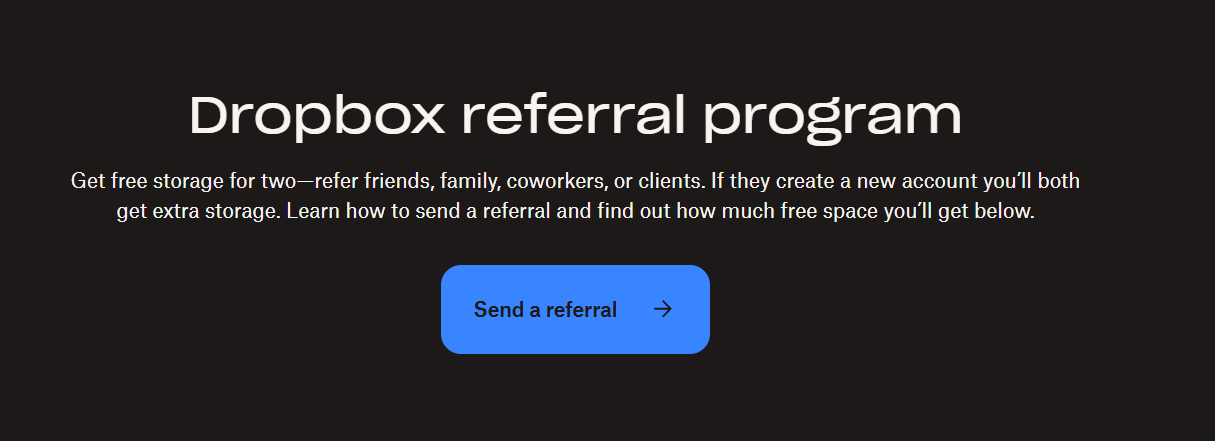
Dropbox became a well-known referral example by rewarding users with extra storage when they invited friends. The reward was directly connected to what users wanted more of.
If your product is usage-based, consider rewarding referrals with more usage, credits, seats, storage, projects, or feature access.
Uber: give both sides a reason to act
Uber has used referral incentives in which existing users invite friends and both sides receive ride credit or discounts.
A double-sided reward can work well when both the referrer and the friend need a reason to act. It is especially relevant for apps, marketplaces, local services, and consumer subscriptions.
PayPal: use cash when the action is highly valuable
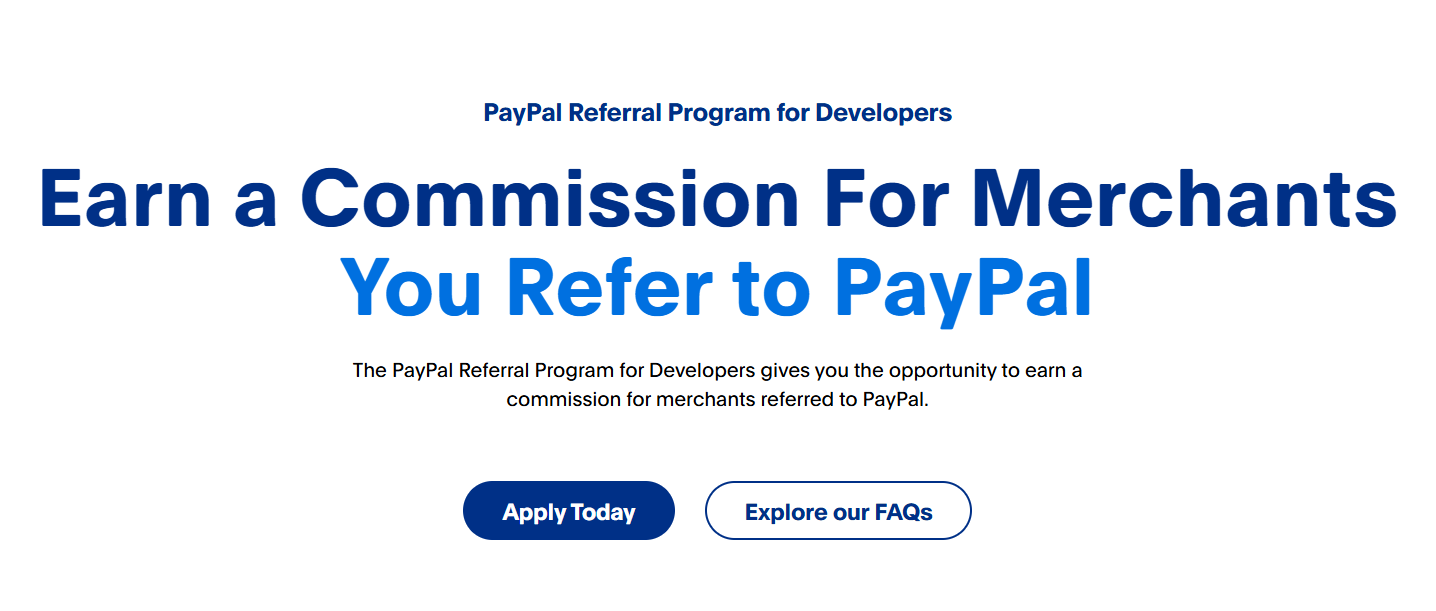
PayPal’s early referral program famously used cash incentives to encourage users to invite others.
Cash can work when the referred customer has high value or when the reward needs to feel immediately useful, including in fintech, B2B, marketplaces, and high-ticket services.
Refer-a-Friend Program Best Practices
Reward the right action
Choose the event that matters to your business: a first purchase, paid subscription, booked appointment, completed consultation, qualified lead, or signed customer. The more valuable the action, the more carefully you should align the reward with it.
Make the offer easy to understand
Customers should be able to explain the program in one sentence. “Give $20, get $20” is easier to share than a reward with several conditions. Keep any necessary eligibility rules in the terms, not in the headline.
Give the friend a reason to act
The friend needs a reason to try the product. That is why double-sided rewards often work: the referrer has a reason to share and the friend has a reason to convert.
Promote it when trust is highest
Ask after a successful purchase, positive review, completed milestone, or other moment when the customer has experienced real value.
Track the full path
Follow invites, clicks, signups, purchases, qualified referrals, active referrers, reward cost, referred-customer revenue, and repeat referral behavior. That shows whether the program is producing profitable growth rather than only reward activity.
What to Measure in a Refer-a-Friend Program
| Metric | What it tells you |
|---|---|
| Referral invites sent | How many customers are actively sharing the program. |
| Referral link clicks | Whether friends are engaging with the offer. |
| Friend conversion rate | How many referred friends complete the desired action. |
| Qualified referrals | How many referrals meet your program rules. |
| Active referrers | How many customers are driving referrals, rather than merely enrolling. |
| Reward cost | What you spend on discounts, credits, cash, products, or perks. |
| Revenue from referred customers | Revenue generated by referred friends. |
| Referred-member retention | Whether referred members remain active past their early billing cycles. |
For memberships, courses, and communities, referred-member retention helps determine whether the referral rate was affordable.
Best Tools and Software to Create a Refer-a-Friend Program
The right software depends on how referrals are tracked and how flexible your reward logic needs to be. Some businesses only need a simple “give X, get Y” flow; others need custom rules, approval steps, multiple reward types, ecommerce or CRM integrations, and room to expand into affiliate, partner, loyalty, or customer reward programs.
| Tool | Best for | Key strengths | Consider if |
|---|---|---|---|
| Siren | Businesses that want flexible referral, affiliate, partner, loyalty, commission, or custom incentive programs | Custom reward logic, event-based tracking, multiple program types, approvals, commissions, payouts, and WordPress/WooCommerce-friendly program setup | You need more than a basic referral widget and may run several incentive programs |
| ReferralCandy | Ecommerce brands | Referral and affiliate programs, coupon and link tracking, store credit, cash, gift cards, and ecommerce integrations | You run an ecommerce store and want a dedicated referral and affiliate tool |
| Referral Factory | Teams that want branded referral flows and CRM-connected programs | Referral pages, referral links and codes, reward workflows, CRM integrations, APIs, and manual qualification | Your referral program needs to connect to a CRM or sales process |
| Friendbuy | Consumer brands running referral, loyalty, or influencer programs | Referral attribution, fraud controls, segmentation, loyalty features, and ecommerce and lifecycle marketing integrations | You are a larger consumer brand seeking referral and loyalty features together |
| Referral Rock | Service businesses, SaaS, ecommerce, franchises, and partner-style referral programs | Referral tracking, reward management, automated emails, member portals, CRM and ecommerce integrations | You want support for customer, partner, ambassador, or affiliate referral sources |
Before choosing a tool, define the program logic: what action qualifies, who receives credit, which reward follows, whether rewards need approval, and whether the program may expand beyond a simple customer referral offer.
For a deeper comparison, see Best Refer-a-Friend Program Software in 2026.
How to Create a Refer-a-Friend Program With Siren
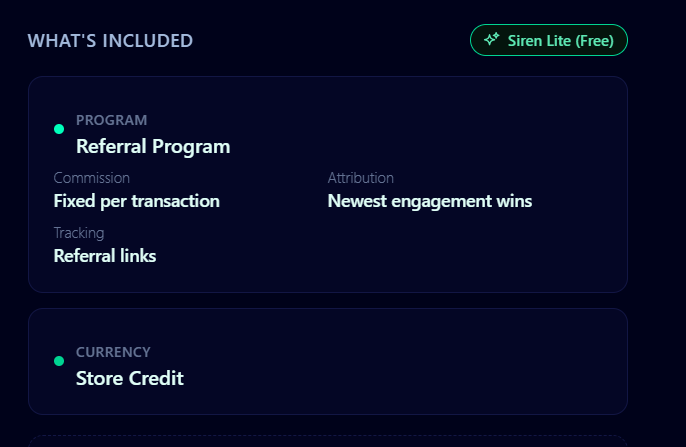
Siren can help you launch a refer-a-friend program from a ready-made recipe, give customers referral links, track referred purchases, and manage rewards in one place.
Start with the Refer-a-Friend Program recipe
Begin with Siren’s Refer-a-Friend Program recipe. Customers receive a referral link, referred friends are tracked when they click it, and a reward is created once the friend completes a qualifying purchase.
Define participants and attribution
Add a registration form so customers can join and receive a unique referral link. When a friend clicks the link, Siren records the referred visit and ties that friend to the customer who shared it.
Review and manage rewards
When a referred friend makes a qualifying purchase, Siren tracks the reward as a commission for review before approval. The recipe provides a structure for tracking the referral, calculating the reward, reviewing it, and managing the payout.
Final Takeaways
A refer-a-friend program turns customer trust into a repeatable growth channel. The strongest programs make the offer easy to explain, choose a qualifying action that matters, reward the right person, and track what happens after the referral.
For a local service business, the right offer is one that still works on the smallest typical job. For membership businesses, the finish line is not the signup. Retention of referred members determines whether referral activity becomes recurring revenue.